
Why Pool Decks Flood During Pittsburgh's Storm Season
Mid-summer in the South Hills means afternoon thunderstorms that drop an inch of rain in twenty minutes, and the pool deck is where a lot of that water ends up. A deck that drains right sheds the storm and dries out in an hour. A deck that doesn't turns into a sheet of standing water that runs back toward the pool, puddles against the house, or sits on the slab until it works its way into the joints and the ground underneath. By August the difference between those two decks comes down entirely to drainage, and it is almost always something that could have been planned for.
Standing water on a pool deck is not just a slip hazard and an algae problem. It is the first sign that runoff has nowhere to go, and on Pittsburgh's clay soil, water with nowhere to go is what shifts slabs, cracks concrete, and undermines the ground a deck sits on. Getting a pool deck drainage system right is cheaper than any of the repairs that follow when you skip it.
Where the Water Actually Comes From
A pool deck collects water from three directions at once during a storm, and a drainage plan has to account for all of them:
- Rain landing directly on the slab. A concrete or paver deck is an impervious surface, so every drop that lands on it has to run somewhere rather than soaking in.
- Splash-out and backwash from the pool. Normal use, plus filter backwash, keeps a low volume of water moving onto the deck all season.
- Runoff from higher ground. On a sloped South Hills lot, water from the yard, a hillside, or a downspout aimed the wrong way sheets straight across the deck on its way downhill.
That third source is the one homeowners miss most. A deck can be graded perfectly and still flood because the real problem is a quarter acre of hillside draining onto it. Fixing that usually means intercepting the water before it ever reaches the slab.
How a Pool Deck Drainage System Works
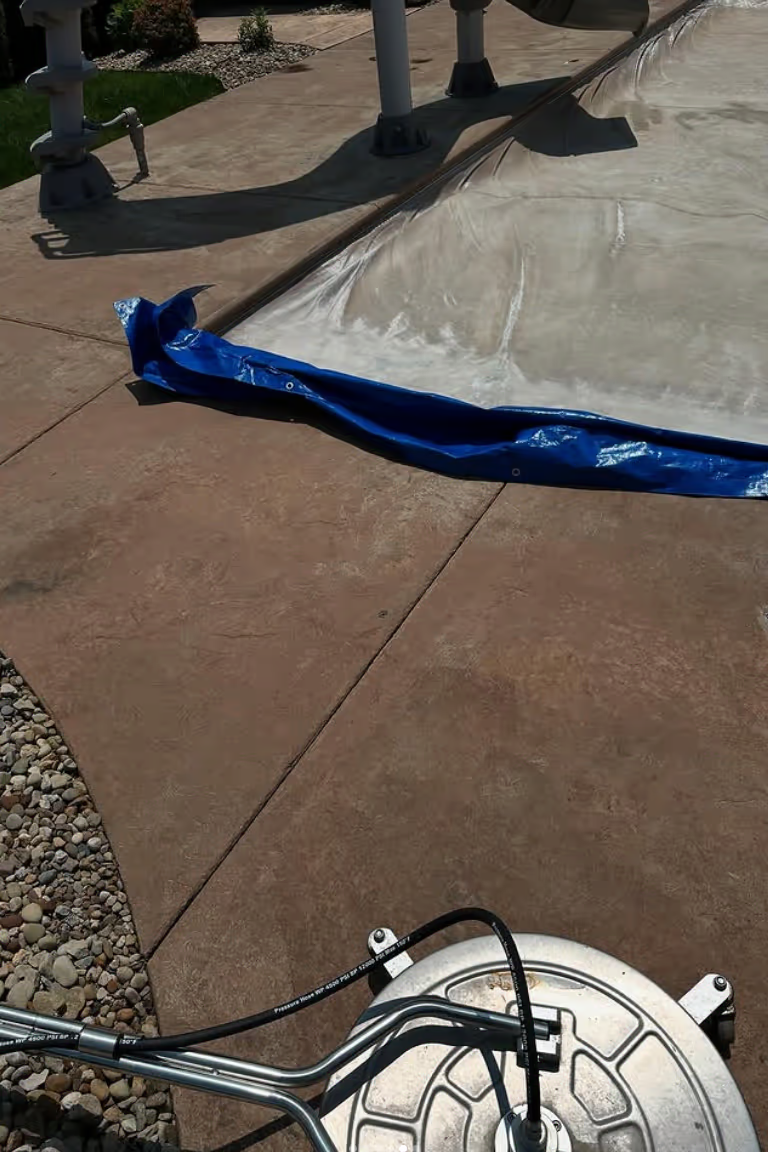
The core of any pool deck drainage system is a linear channel drain, a slotted trench set flush with the deck surface that runs along the low edge of the slab. Water hits the deck, the deck's slope carries it to the channel, and the channel collects it and pipes it to a safe outlet away from the pool and the house. On a full perimeter deck, the channel often wraps the pool coping so splash-out never gets a chance to pool.
Where that outlet goes matters as much as the drain itself. The collected water has to daylight downhill, tie into a dry well, or connect to existing yard drainage, somewhere it will not simply resurface at the base of the deck or push toward the foundation. A trench drain that dumps two feet away into saturated clay has not solved anything; it has just moved the puddle.
Slope and Grading Come First
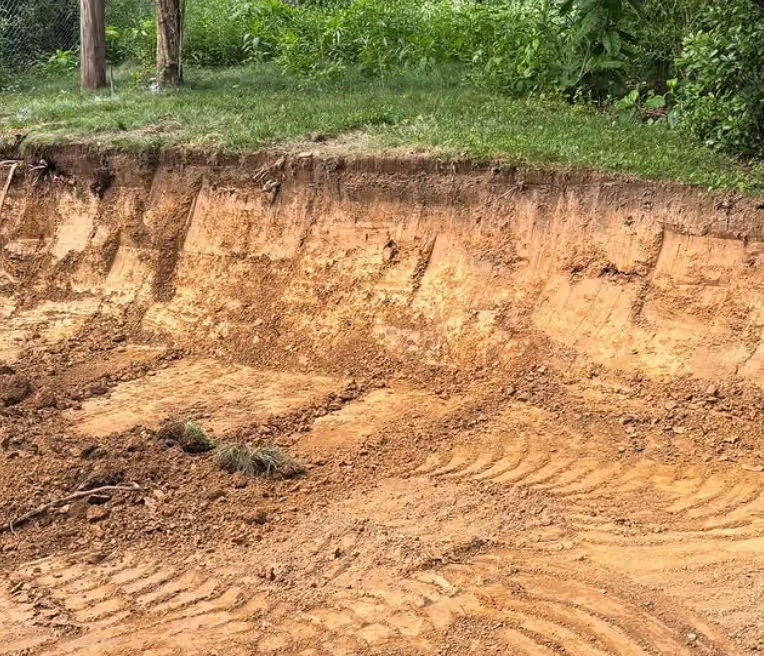
The best drain in the world does nothing if the deck is flat, because water only moves toward a channel if the surface tilts it there. A pool deck needs a slight, deliberate pitch away from the pool and toward the drains, usually around a quarter inch of fall per foot, enough to move water without being noticeable underfoot. That pitch gets set during excavation and grading, before a single yard of concrete or a single paver goes down.
This is why drainage is a site-work decision, not a finishing touch. Once a slab is poured flat, the only fixes left are surface-mounted channels and saw-cut trenches, which work but cost more than getting the grade right the first time. Our guide to grading and drainage on landscape projects covers how the pitch of the ground drives everything built on top of it. A paver deck has an advantage here: individual units can be lifted and reset to correct a low spot, where a monolithic slab has to be cut.
Drainage Around an Above-Ground Pool
Drainage around an above ground pool is a different problem, because there is no slab, just a ring of ground the pool sits on and whatever deck or patio wraps it. Here the risk is water collecting under and against the pool's base, softening the ground the whole structure depends on. A pool set on saturated, settling clay can go out of level, and an out-of-level above-ground pool is a real failure, not a cosmetic one.
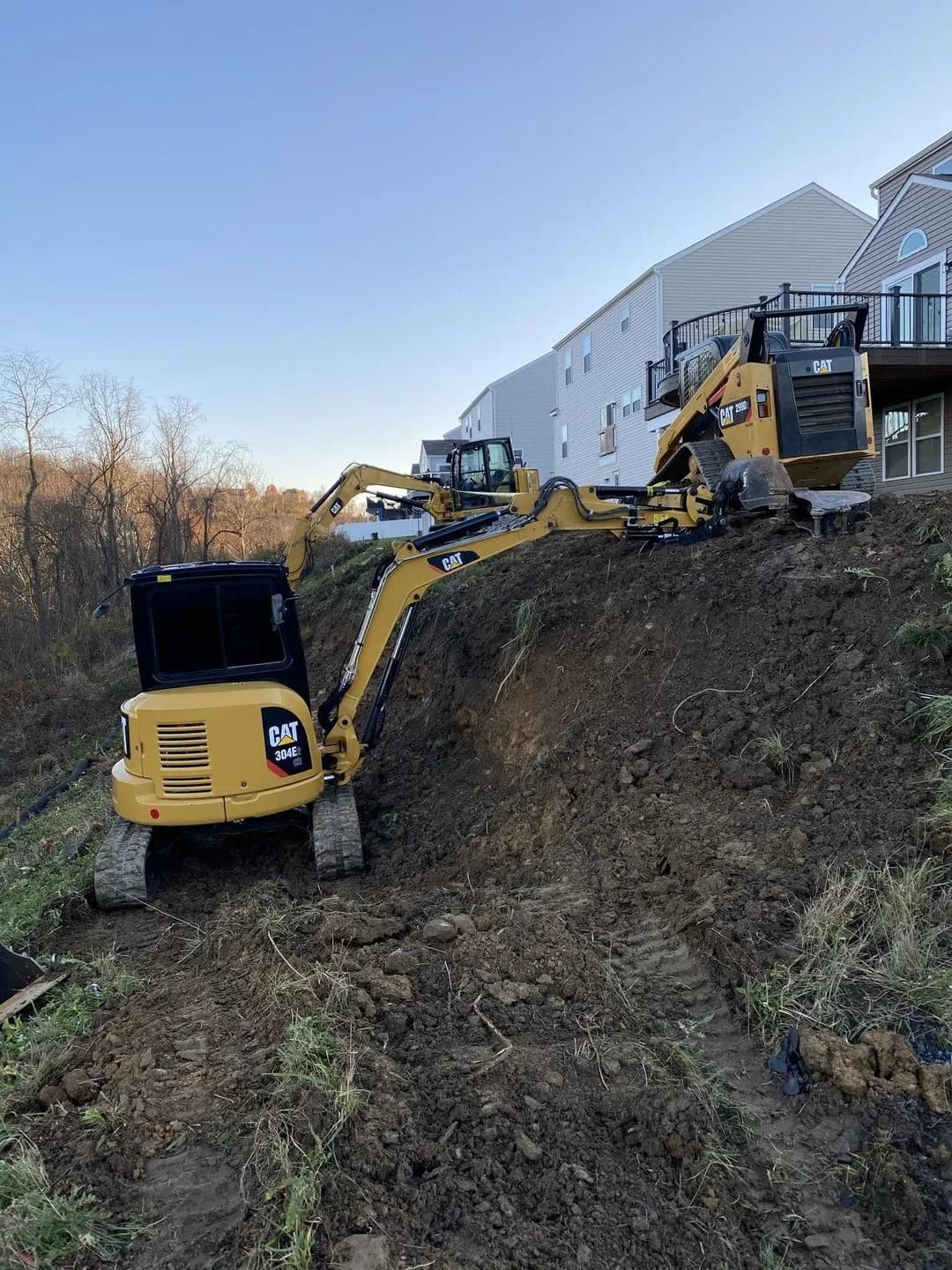
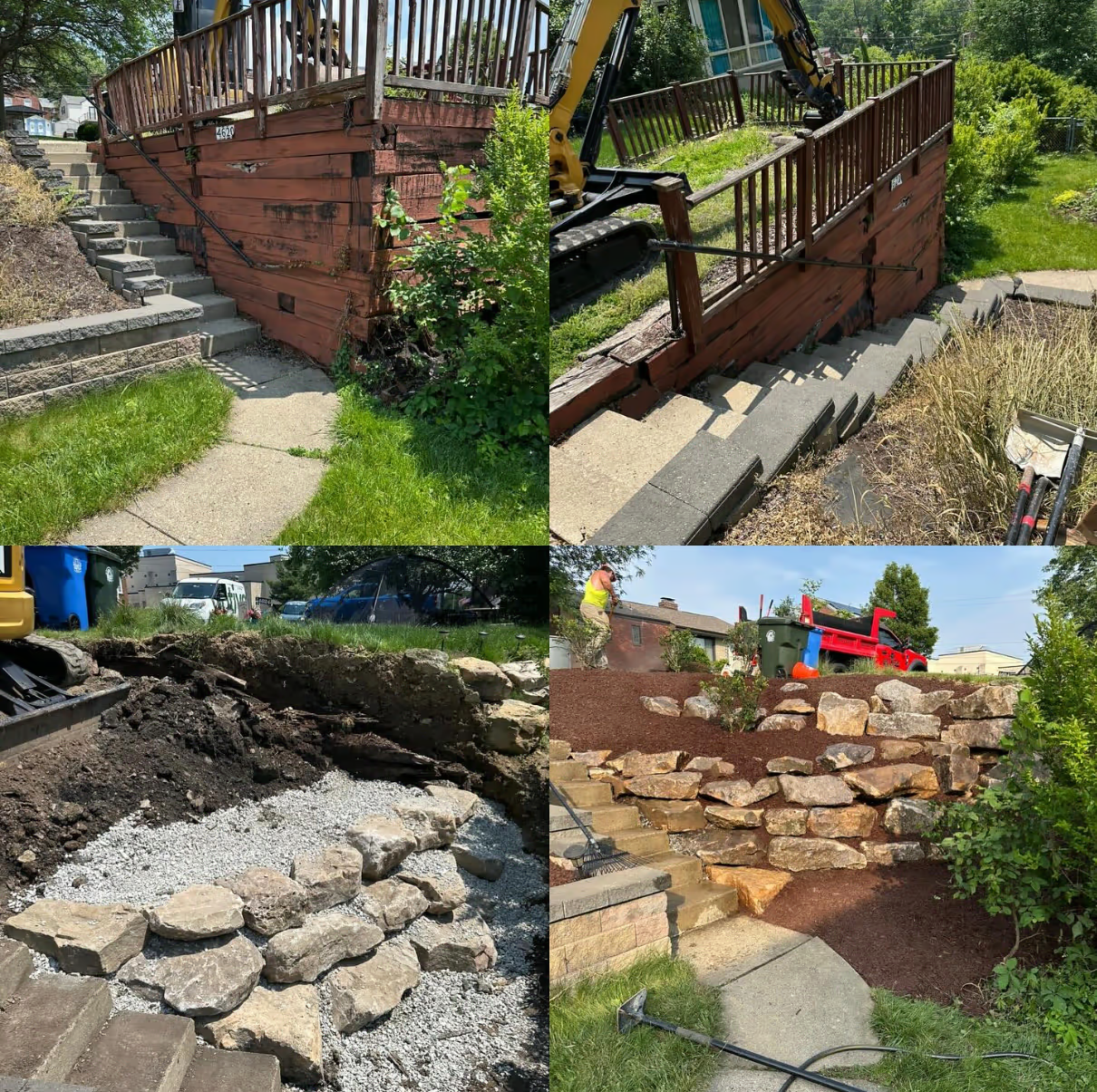
The fix is grading the ground to shed water away from the pool ring in every direction and, on a sloped lot, cutting off uphill runoff before it reaches the pad. A French drain uphill of the pool intercepts groundwater and routes it around, which is often the single most effective move for a pool tucked against a South Hills hillside.
Clay Soil and Freeze-Thaw Make Bad Drainage Worse
Two Pittsburgh conditions turn a minor drainage flaw into deck damage. The first is clay: the dense subsoil under most of the region drains slowly, so water that gets under a deck lingers instead of seeping away, staying long enough to soften the base and let the slab settle. The second is freeze-thaw. Water trapped in deck joints, cracks, or the base course freezes through the winter, expands, and levers the concrete apart a little more each cycle from November through March. A deck that merely puddles in July is a deck that heaves and cracks by spring. Our breakdown of spring drainage problems covers what that damage looks like once the thaw exposes it.
When the Deck Is Already Cracking or Settling
If a deck is already cracking, settling toward the pool, or holding water in spots that used to drain, the drainage failure has usually been at work underneath for a while. At that point the repair is two jobs: fix the water problem so it does not recur, then address the cracked or settled concrete itself. Doing the second without the first just buys a season before the same crack comes back.
On a new build, the cleanest path is to scope drainage alongside the pool from the start. A regional pool builder like Elements Landscape Management will plan the deck grade, the drains, and the outlet as part of the pool design, and the excavation crew sets the base to match. Our own guide to pool excavation in Western PA walks through how the dig and base prep set up everything the deck sits on later.
Getting Pool Deck Drainage Right in Pittsburgh
A dry, sound pool deck is a drainage system that was planned before the concrete went down: the right slope, drains at the low edge, and an outlet that actually carries water away on Pittsburgh's slow-draining clay. Dirt Works handles the grading, drainage, and site work behind pool decks across the South Hills, whether it is a new build or a flooding deck that needs the water problem solved. Contact us or call (412) 770-5334 and we will walk the site and figure out where your water is really going.