
How Landslide-Prone Is Pittsburgh, Really?
Pittsburgh is one of the most landslide-prone metro areas in the United States, and that isn't local folklore. It's documented in federal surveys, city budgets, and PennDOT repair ledgers. We build retaining walls on these hillsides for a living, so we pulled the public numbers into one place. Every figure below links to its source.
Pittsburgh landslide facts at a glance:- About 110 square miles, or 15 percent, of Allegheny County has a significant degree of susceptibility to landsliding, according to the U.S. Geological Survey.
- More than 90 percent of landslides in Allegheny County are triggered by human activity, cutting into or loading sensitive slopes, per the USGS landsliding report for the county.
- Over 200 landslides hit the Pittsburgh region in 2018, Pennsylvania's wettest year on record, and the city spent more than $12 million on cleanup, as reported by PublicSource.
- PennDOT District 11 has tracked roughly 80 active landslides in the Pittsburgh region against a repair backlog of more than $50 million, about $40 million of it in Allegheny County alone, per CBS Pittsburgh.
- A single public landslide repair can cost up to $1 million, and Pittsburgh's Mt. Washington stabilization alone is a $13 million project, $10 million of it from FEMA.
If you own a home on a slope in the South Hills, those numbers are the backdrop to every leaning retaining wall and soggy hillside you've ever squinted at. Here's what's behind them.
What Do Landslides Cost Pittsburgh Every Year?
The public tab is bigger than most homeowners realize. Pittsburgh budgeted $8 million for slope failure remediation in 2025, after spending $14 million on hillside remediation in 2022. FEMA has paid $1.2 million just to buy out 11 landslide-threatened homes on one street in the South Side Slopes.
On the state side, PennDOT's District 11 executive told CBS Pittsburgh the district budgets about $6 million a year for landslide repairs while the full backlog exceeds $50 million. One slide that took out Route 30 cost $12 million by itself. And slides keep coming: a landslide closed Route 51 in Stowe Township in March 2026, and a Moon Township slide in January 2024 took 52,000 tons of rock to stabilize.
None of those figures include private losses. Landslide damage is excluded from standard homeowners insurance, so when a hillside takes out a garage or a backyard, that cost usually lands on the owner.
Why Does Pittsburgh Have So Many Landslides?
Three ingredients, all local:
The Pittsburgh red beds. Beneath much of the region sits a layer of red claystone, roughly 30 to 50 feet thick, that geologists call the Pittsburgh red beds. Dry, it's nearly as hard as rock. Saturated, it softens and loses strength, and whatever sits above it starts to move. It is the signature failure layer in Allegheny County slides. Even the name Monongahela likely comes from a Native phrase meaning "river with the sliding banks". More heavy rain. More than 80 percent of Pennsylvania monitoring sites recorded more heavy-rain events in the 2010s than in the 1980s. Wet years like 2018 turn slopes that held for decades into active slides. Us. The USGS finding that more than 90 percent of county landslides trace to human modification of slopes cuts both ways. Cutting into a hillside for a driveway, stacking fill at the top of a slope, or letting downspouts dump onto a bank can start a slide. But it also means most residential slope failures are preventable with correct grading, drainage, and retaining wall construction.Which Pittsburgh Areas Are Most at Risk?
The city's hillside neighborhoods carry the most public repair activity: Mt. Washington, the South Side Slopes, Elliott, Perry North and South, and Morningside all appear in the city's remediation plans. Allegheny County publishes an interactive Landslide Portal that maps reported slides and susceptible slopes countywide; it's worth checking your own parcel.
In the South Hills, where we do most of our work, the risk shows up less as dramatic road closures and more as slow-motion failures: retaining walls leaning a little more each spring, yards slumping toward a downhill neighbor, foundations cracking above a creeping bank. Whitehall, Baldwin, Castle Shannon, Mt Lebanon, and Bethel Park are full of steep lots cut into that same red bed geology, and much of it was terraced decades ago with timber or unreinforced block walls that were never engineered for the load.
What Can Hillside Homeowners Actually Do?
The pattern in the public data repeats at residential scale: water plus disturbed slope equals movement. Which means the fixes are the same ones the city and PennDOT use, scaled down.
- Control the water first. Most residential slope movement starts with saturation. Extending downspouts, correcting grade so runoff moves away from the slope, and installing a French drain to intercept groundwater are the cheapest insurance a hillside lot can buy.
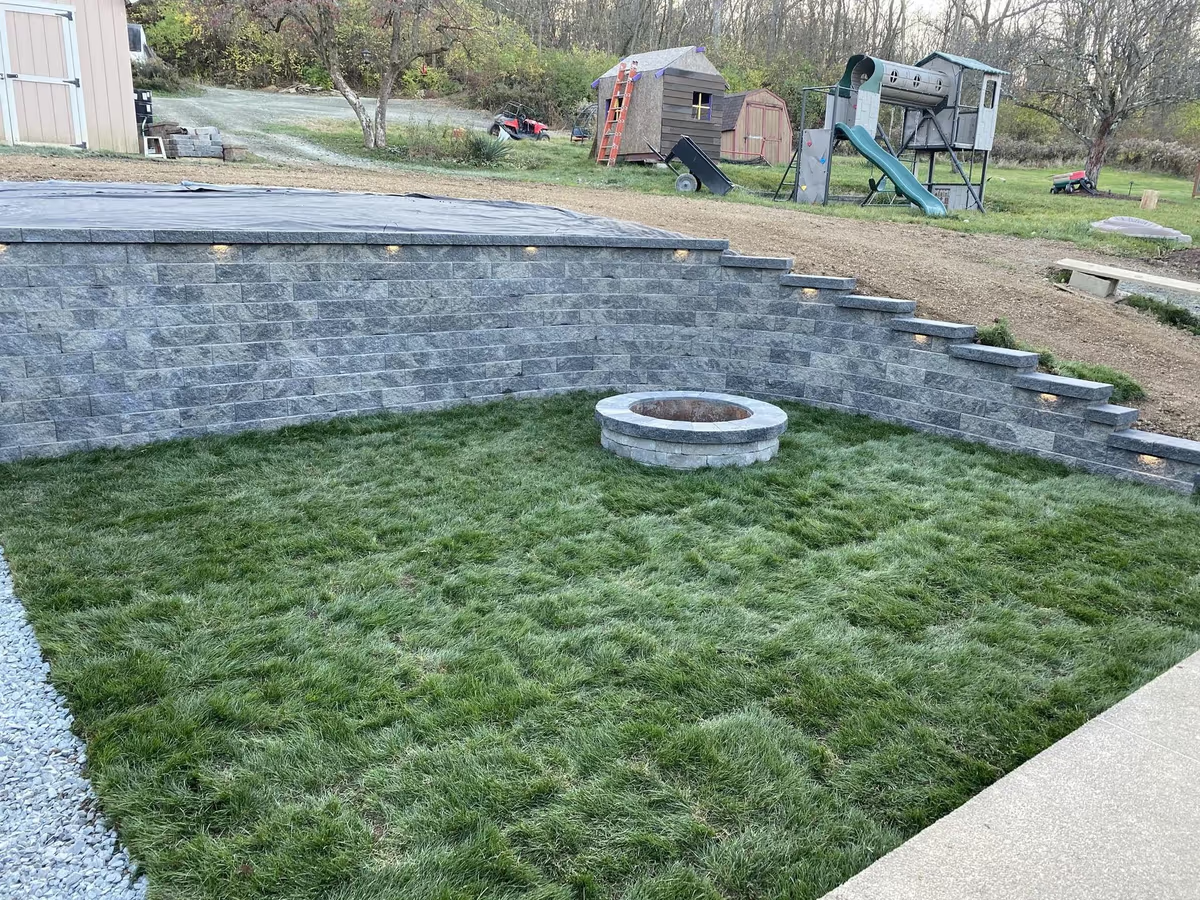
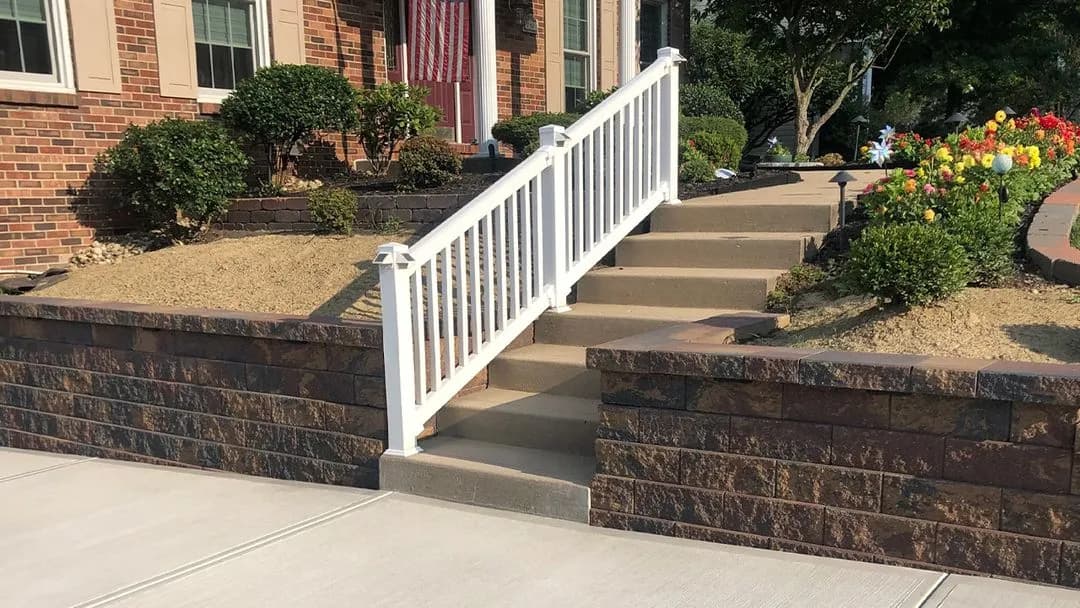
- Build (or rebuild) retaining walls with drainage behind them. A properly built retaining wall is drainage infrastructure with a face on it: compacted base, drainage aggregate, perforated pipe to daylight. Walls without that are the ones you see bowing after wet winters. Our guide to replacing versus repairing a retaining wall covers the warning signs.
- Don't cut or load a slope without a plan. The 90 percent statistic exists because small projects, a shed pad, a pool dig, a driveway widening, change how a slope carries weight and water. On a steep Pittsburgh lot, grading and excavation decisions are stability decisions.
When to Bring in a Pro
If a wall on your property is leaning, a slope is developing cracks or bare scarps, or water is emerging from a hillside where it didn't before, that's the point to get eyes on it, before it becomes one of next year's statistics. Dirt Works Excavation builds engineered retaining walls and handles grading and drainage across Pittsburgh's South Hills, including Whitehall, Bethel Park, Baldwin, Mt Lebanon, South Park, and Jefferson Hills. Contact us or call (412) 770-5334 for a straight assessment of what your slope is doing and what it would take to stop it.
*Journalists and researchers: the statistics above are drawn entirely from the linked public sources (USGS, PublicSource, CBS Pittsburgh, WESA, Allegheny County). Feel free to cite this page; for questions about hillside construction practice in the South Hills, reach us at (412) 770-5334.*