
Why Spring Thaw Reveals What Winter Hides
Pittsburgh winters do a number on your landscape, but most of the damage stays hidden under snow and frozen ground. As temperatures climb and the frost breaks, water that has nowhere to go starts making problems visible.
For homeowners across the South Hills and surrounding areas, March and April are the months when drainage issues announce themselves. A wet spring combined with Pittsburgh's heavy clay soils and rolling terrain creates a short window where acting quickly can save significant money down the line.
What to Look for When the Snow Clears
Water Pooling Near the Foundation
Walk your property's perimeter during snowmelt or after a spring rain. Standing water within 10 feet of your foundation means water is moving toward your home rather than away from it. Puddles that linger more than a day indicate a grading issue that needs attention before the next heavy rain.
Soft, Saturated Ground That Won't Dry Out
Areas that stay spongy and wet long after rain passes point to poor subsurface drainage. Pittsburgh's clay-heavy soils drain slowly, and water can sit near the surface for days. Spots that stay wet significantly longer than the rest of your yard likely need drainage tile or regrading.
New Erosion Channels
Look for small grooves, bare soil paths, or disturbed mulch that traces where water has been moving. These channels form where runoff has no proper outlet and tend to point directly toward the lowest point on your property, which may be your foundation, a neighbor's yard, or a slope edge.
Basement Dampness or New Stains
After the first heavy spring rains, check your basement walls for new moisture stains, white mineral deposits, or musty odors. These are signals that water is pressing against your foundation from outside.
Frost Heave in Hardscapes
Winter freeze-thaw cycles shift pavers, push up concrete slabs, and crack retaining walls. Spring is when these issues become obvious, and when they're easiest to address before more cycles cause additional movement.
Pittsburgh-Specific Drainage Challenges
Clay SoilAllegheny County sits on mostly clay soil, which holds water rather than letting it drain through. Surface water has to go somewhere when the ground is fully saturated. Proper drainage tile and grading matter here in a way they don't in sandier regions.
Hillside PropertiesPittsburgh's terrain puts most properties on some kind of grade. On slopes, water moves faster and concentrates in low points. Retaining walls, swales, and properly graded terracing all play a role in managing where that water ends up.
Heavy Spring Rain PatternsWestern PA typically sees significant rainfall from March through May. If your property has a drainage weakness, you'll know about it by April. Acting in early spring gives you the best window to complete work while the ground is still workable and before summer dries things out.
DIY Fixes vs. When to Call a Contractor
What Homeowners Can Manage- Redirecting downspout extensions away from the foundation
- Adding topsoil to low spots near the foundation and re-sloping toward the yard
- Clearing gutters and downspouts of winter debris
- Removing leaves and debris blocking natural drainage paths
- Water is actively entering your basement or crawlspace
- Large areas of your yard stay saturated even during dry spells
- Visible erosion is occurring on a slope or near a retaining wall
- Foundation cracks appeared or noticeably worsened over winter
- Drainage tile needs to be installed, extended, or rerouted
Solutions We Commonly Install in Spring
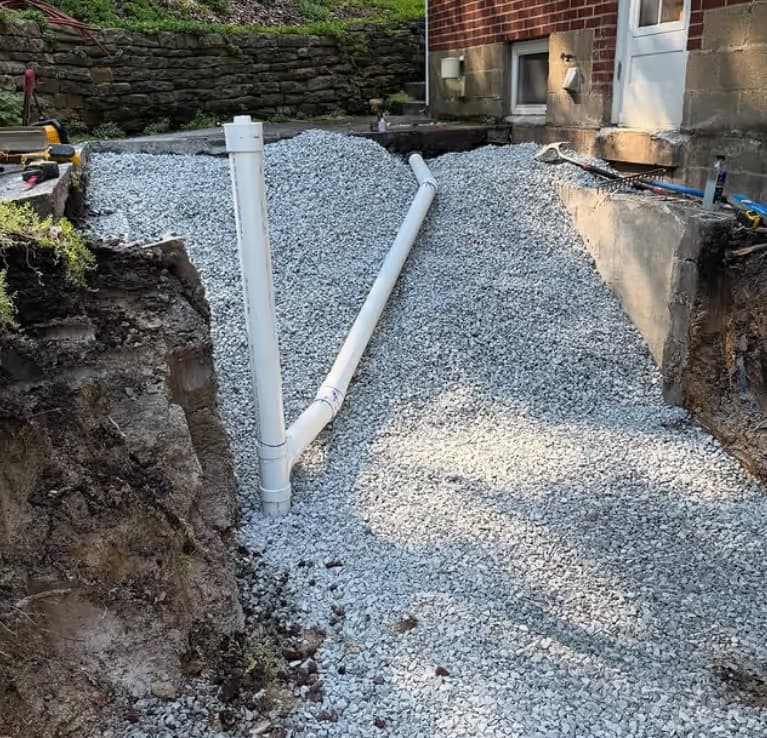
French DrainsFor yards with persistent standing water, a French drain intercepts subsurface water and routes it to a proper outlet. Spring is ideal timing: the ground is workable, and restoring the lawn with hydroseeding afterward fits right into the growing season.
Yard RegradingWhen grading has failed or settled over time, bringing in topsoil and reshaping the slope around your foundation is one of the most effective drainage corrections you can make. We combine regrading with soil compaction and lawn restoration so the result lasts.
Surface SwalesOn properties that receive significant runoff from uphill areas, a graded swale channels water across the property to a safe discharge point. It's a low-profile solution that can be landscaped to blend into the yard naturally.
Spring Is the Right Time to Act
The same conditions that make spring drainage problems visible (wet, workable soil) also make them the right time to fix. Once the ground dries and hardens in summer, excavation and drainage work becomes more difficult and disruptive. If you're seeing warning signs this spring, the window to act is now.
Dirt Works handles drainage excavation and regrading throughout the Pittsburgh South Hills and offers free on-site evaluations for drainage problems. Contact us to assess your property and identify solutions before the next round of heavy rain.