
Water Decides Which Landscapes Survive
You can put in the best plantings, the cleanest patio, and the healthiest lawn on a property and still watch it come apart in a couple of seasons if water is moving the wrong way underneath it all. Grading and drainage are the parts of a landscape nobody notices when they are done right and everybody notices when they are done wrong.
The reason is simple. Water always moves, and it always follows the grade. Get the grade wrong and every rain works against the project: pooling in the beds, running across the patio, saturating the lawn's root zone, and pushing toward the foundation. Get it right and the same rain leaves without doing damage. That is the whole game, and it happens before a single plant goes in.
Grading Is the Foundation, Literally
Grading is the shaping of the ground so water sheds where you want it to go. The standard most of the industry works to is a fall of roughly six inches over the first ten feet away from the house, enough slope to keep roof and surface water moving away from the foundation rather than collecting against it.
That principle scales across the whole property. Beds should drain, not hold. Lawns should shed excess rather than turn to sponge. Patios and walkways should pitch slightly so water runs off instead of pooling and freezing. None of this is visible in a finished landscape, which is exactly why it gets shortchanged: it is easy to spend the budget on what shows and skip the shaping underneath.
Where Drainage Picks Up
Grading handles surface water. Drainage handles the water grading alone cannot move, and on clay soil there is always some.
Clay-heavy ground, which covers most of the region here and across a lot of the broader area, does not let water soak down at any useful rate. So even a well-graded lawn can stay saturated when rain comes faster than the surface can shed it, or when a low spot has nowhere to drain. That is where subsurface drainage earns its place.
French drains intercept water in the ground and route it to a safe outlet. A gravel-filled trench with a perforated pipe, sloped to daylight or a dry well, pulls saturating water out of a problem area before it drowns roots or pushes toward the house. A Northeast Ohio firm covering similar clay-soil conditions, Samson Landscape, has written about how backyard drainage and French drains solve exactly this kind of standing-water problem, and the fundamentals travel well across regions that share the same heavy soil. Swales do surface-level work on lots that take runoff from uphill. A shallow graded channel carries water across the property to a safe discharge point, and it can be shaped and planted to disappear into the landscape rather than reading as infrastructure.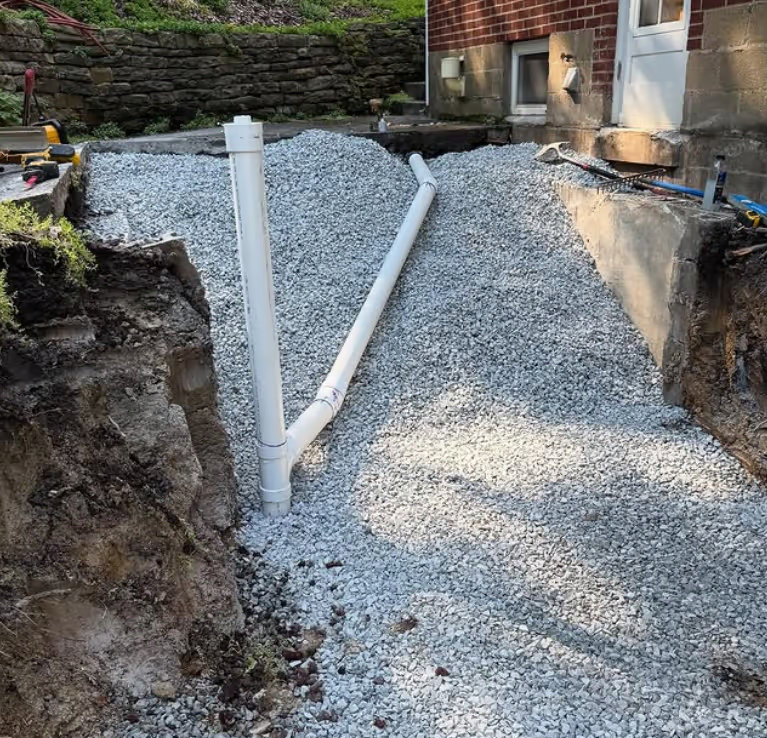
Doing It in the Right Order
The costly mistake is treating grading and drainage as an afterthought, something to address once the water problem shows up. By then the plantings are in, the hardscape is set, and fixing the grade means tearing up finished work.
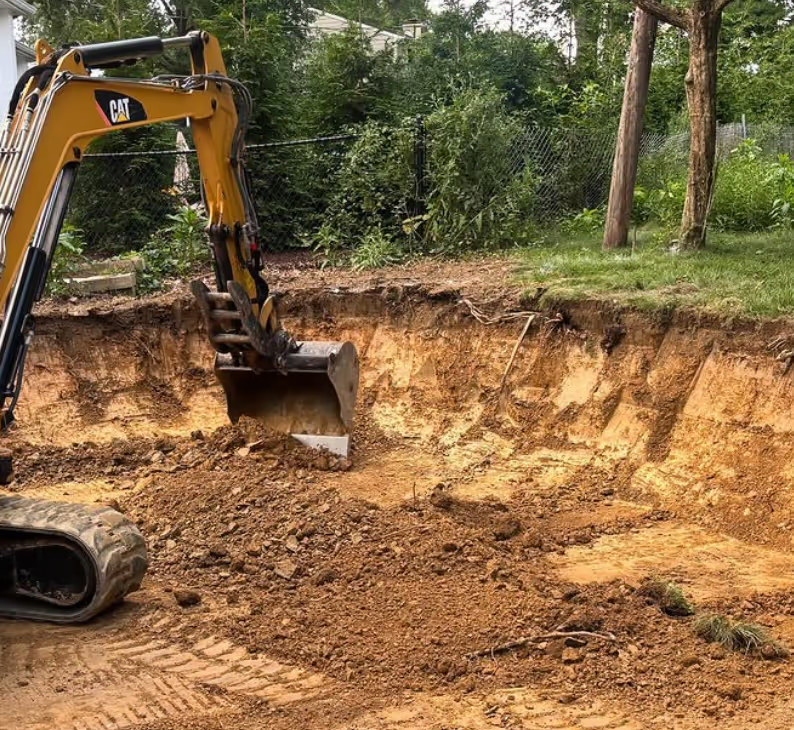
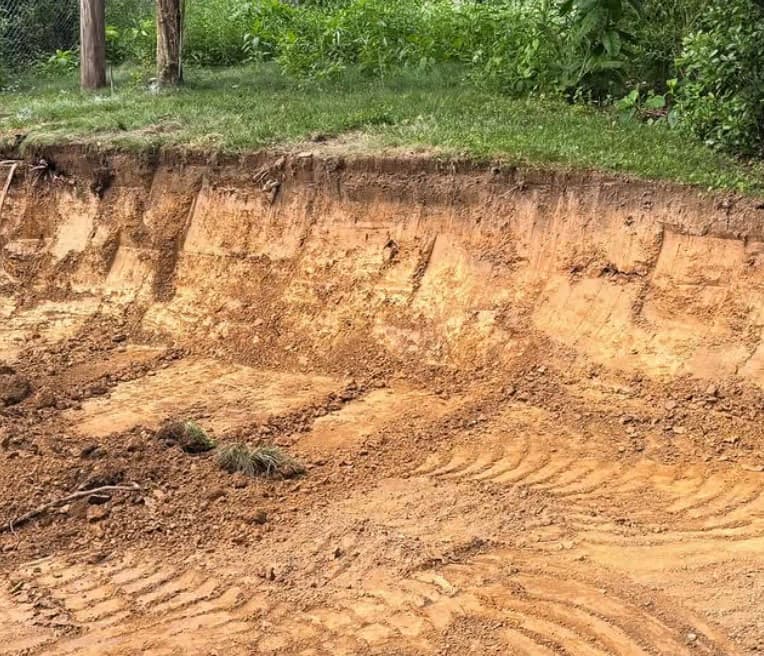
The right sequence puts the ground first. Establish the grade, install any subsurface drainage the soil and slope call for, confirm water moves where it should, and then build the visible landscape on top of ground that is already working with you. It is far cheaper to shape dirt before the patio goes down than to lift the patio to reshape the dirt.
Signs the Grade Is Already Working Against You
On an existing property, a few things tell you water is winning:
- Puddles within ten feet of the foundation after a normal rain
- Spots that stay soggy for days while the rest of the yard firms up
- Mulch that migrates downhill or bare erosion channels on a slope
- Basement dampness or new stains after heavy storms
- Hardscape that has shifted, cracked, or heaved
Any of these means the grade, the drainage, or both need attention before the next round of planting or hardscape goes in on top of the problem.
Build on Ground That Works
A landscape is only as durable as the grading and drainage under it. Get the water moving the right way first and everything above it lasts longer with less fighting.
Dirt Works handles grading, drainage, and excavation across Pittsburgh's South Hills, and we would rather solve the water before the pretty part goes in than come back and fix it after. If water is pooling where it should not, contact us for a look at the property.