
How Much Does a Retaining Wall Cost in Pittsburgh?
A professionally installed retaining wall in Pittsburgh costs $40 to $100+ per square foot of wall face in 2026, depending on the material and the site conditions. For a typical 3 to 4 foot wall, that works out to roughly $150 to $350 per linear foot installed. A complete price covers excavation, compacted base, drainage, and backfill, not tacked on later.
"Square foot of wall face" just means length times height. A 30-foot wall standing 3 feet tall has 90 square feet of face, so at $40 to $100 per square foot it lands between $3,600 and $9,000 installed.
| Material | Installed Cost (per sq ft of wall face) |
|---|
| Timber | $25-$40 |
| Segmental block | $40-$75 |
| Boulder / natural stone | $50-$100+ |
These are complete installed ranges for retaining wall installation across Pittsburgh's South Hills, not national averages pulled from a lead-generation site. National figures often quote the wall block alone and leave out the digging, the drainage, and the backfill, which on a Pittsburgh hillside is most of the job.
What Do Common Wall Sizes Cost?
Here's what the market ranges look like at three sizes we quote all the time:
| Item | Wall Face | Installed Cost |
|---|
| 30 ft long, 3 ft tall | 90 sq ft | $3,600-$9,000 |
| 30 ft long, 4 ft tall (segmental block) | 120 sq ft | $5,000-$12,000 |
| 50 ft long, 4 ft tall | 200 sq ft | $4,000-$14,000 by material |
| 40 ft long, 6 ft tall | 240 sq ft | $9,600-$24,000+ |
Notice the jump between the first two rows. The 4-foot wall isn't just bigger than the 3-foot wall; it crosses the engineering threshold, since walls 4 feet and taller require engineered design and permits, so each square foot of it tends to cost more. That threshold matters when you're deciding how tall a wall actually needs to be. Sometimes regrading the slope slightly, or stepping one tall wall into two shorter terraced walls, keeps a project below it.
For a fast ballpark on your own dimensions, our retaining wall cost calculator lets you plug in length and height and see a range before anyone visits the site.
Why Does Wall Height Drive the Price So Much?
Because the force pushing on a wall grows much faster than the wall does. Doubling a wall's height roughly quadruples the lateral soil pressure at its base, so a 6-foot wall isn't holding back 50 percent more load than a 4-foot wall; it's holding back more than double. Three things follow from that:
- Engineering. Walls 4 feet and taller require engineered design. A licensed engineer sizes the base, the block system, and the reinforcement for the actual soil loads on your slope. That design work, and building to it, is part of why the per-foot rate steps up.
- Geogrid reinforcement. Taller walls get layers of geogrid, a soil reinforcement mesh that extends back into the hillside and ties the wall to the ground behind it. Installing it means excavating further into the slope and placing backfill in engineered lifts, which is more machine time and more material.
- Permits. Most Pittsburgh-area boroughs require permits and engineering approval for walls over 4 feet. We handle the paperwork, but the review process is part of the project timeline and cost.
On Pittsburgh's clay hillsides those loads run higher than the textbook numbers, because saturated clay pushes harder than drained granular soil. A wall height that would be casual in sandy ground is a serious structure here.
What Makes Pittsburgh Lots Harder on Walls and Budgets?
Four local conditions show up in almost every South Hills wall quote:
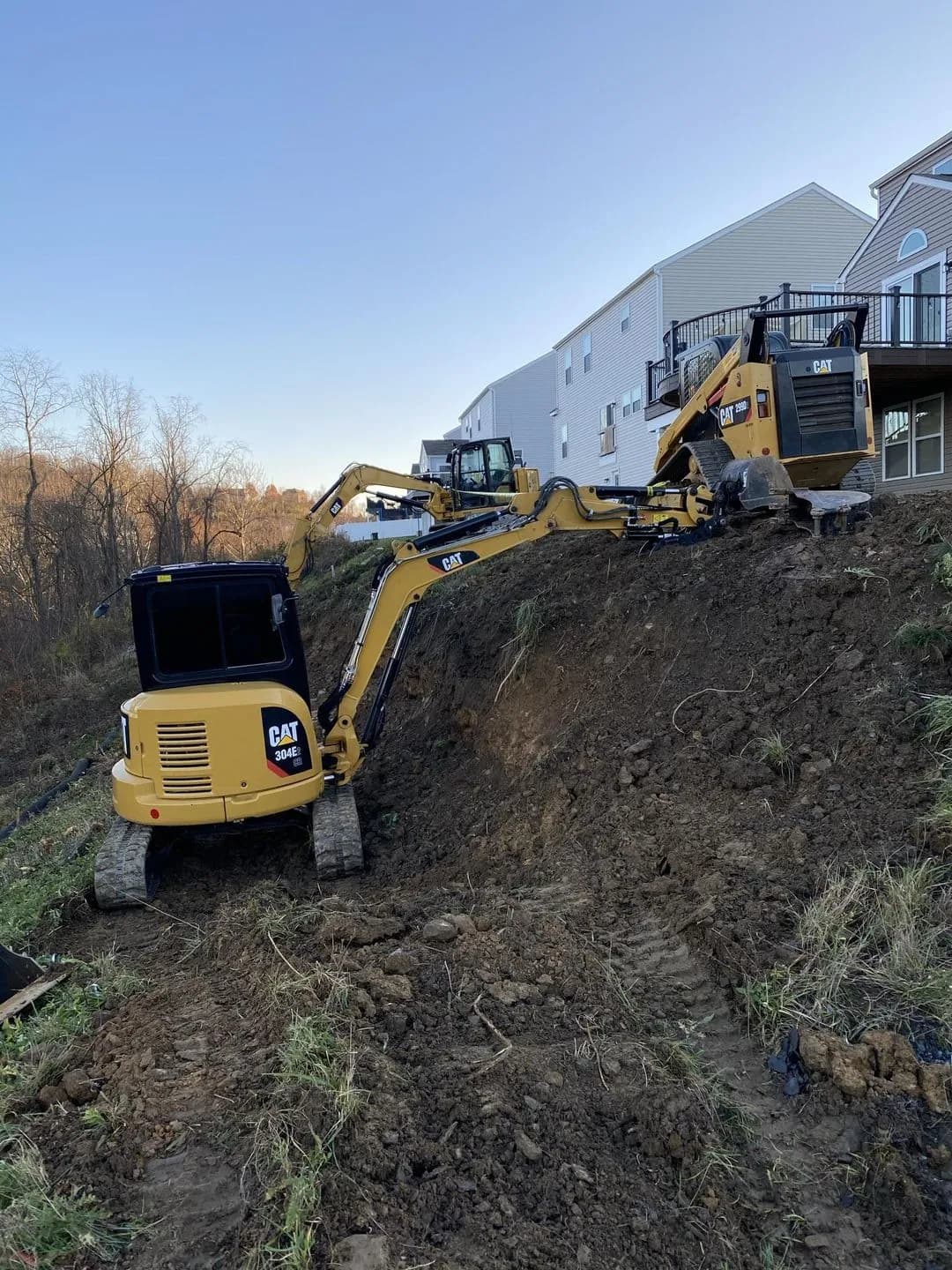
- Steep lots. Neighborhoods like Mt Lebanon, Bethel Park, and Jefferson Hills are built on grades where the machine has to bench into the slope just to create a place to work. Steeper cuts mean more excavation per foot of wall.
- Clay soil. South Hills clay holds water and swells against whatever is holding it back. It also digs slow and hauls heavy, which affects the excavation phase of every wall.
- Freeze-thaw. Pittsburgh winters freeze and thaw the ground dozens of times a season. Water trapped behind a wall expands with every cycle, which is why the drainage layer is structural here, not optional.
- Tight access. Narrow side yards force smaller equipment and more trips for base stone, drainage aggregate, and block. Same wall, more hours.
Drainage deserves the extra sentence: hydrostatic pressure, meaning water building up behind the wall with nowhere to go, is the number one reason retaining walls fail. Nearly every leaning or bowing wall we replace failed behind the face, not at it. That's why drainage aggregate, perforated pipe, and filter fabric are baked into our pricing instead of listed as options.
What's Included in the Price, and What Adds to It?
The installed ranges above cover the full assembly: excavation into the slope, a compacted stone base, the drainage system behind the wall, and engineered backfill. Those aren't extras, because a wall without them is a wall we'd be back to replace.
A few things do add cost on top of the base rates:
- Demolition of an existing wall. Tearing out a failed timber or block wall and hauling the debris is its own line item before the new wall starts. If you're not sure whether your current wall can be saved, our guide to repairing versus replacing a retaining wall walks through the warning signs.
- Long hauls. If spoil can't be regraded on site, trucking heavy clay across town adds real money.
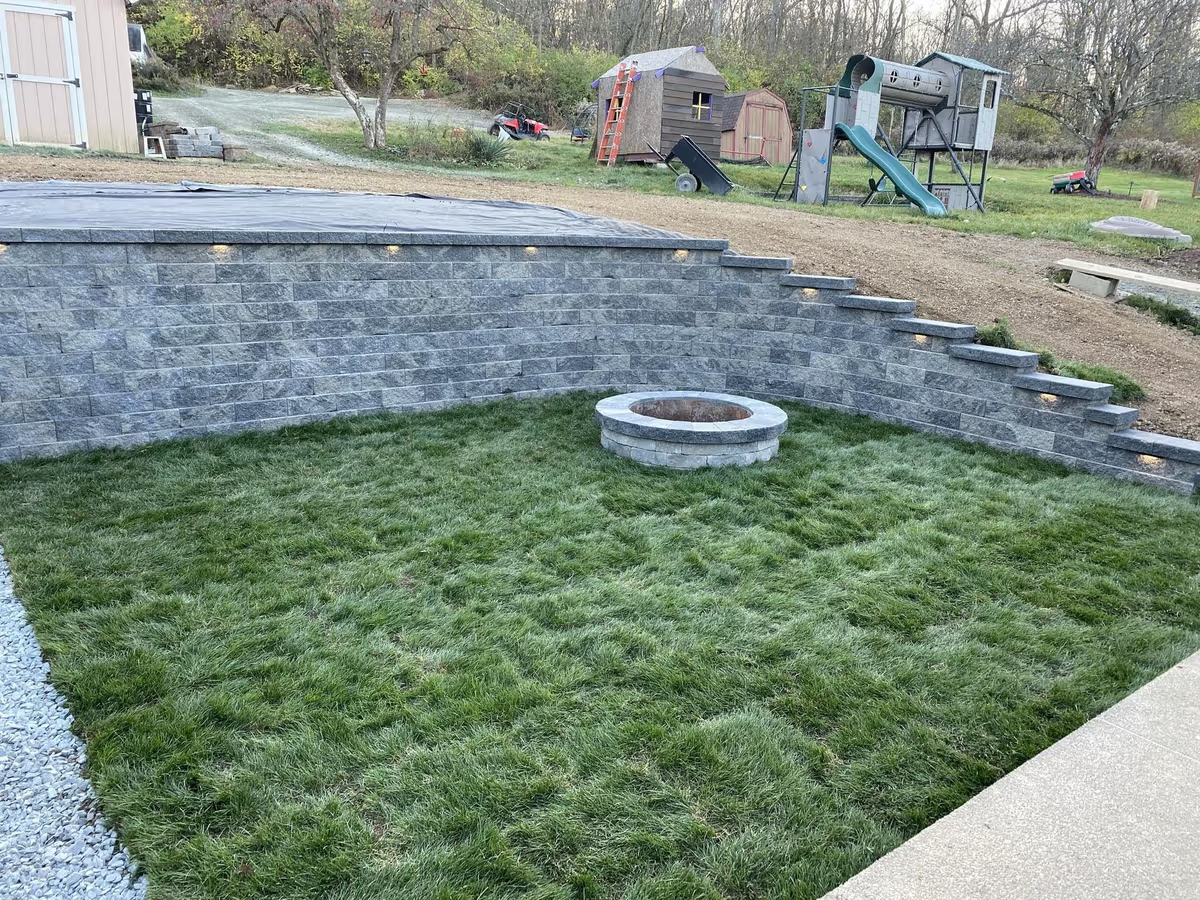
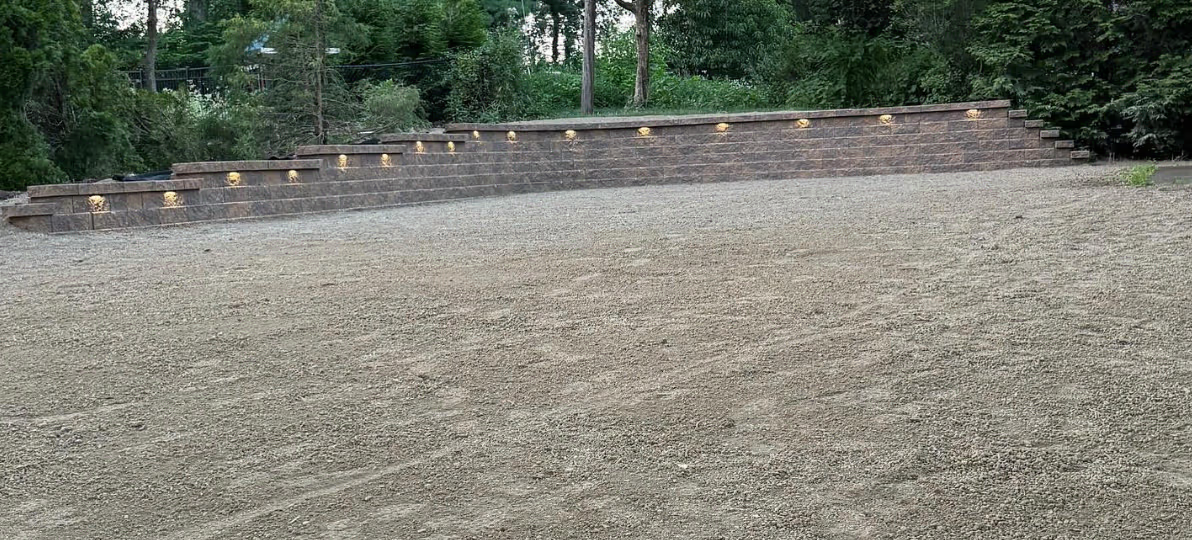
- Extras like lighting, caps, and stairs. Integrated low-voltage lighting, decorative cap units, and steps built into the wall are worth pricing, but they sit on top of the base rate.
Does the Material Change the Price?
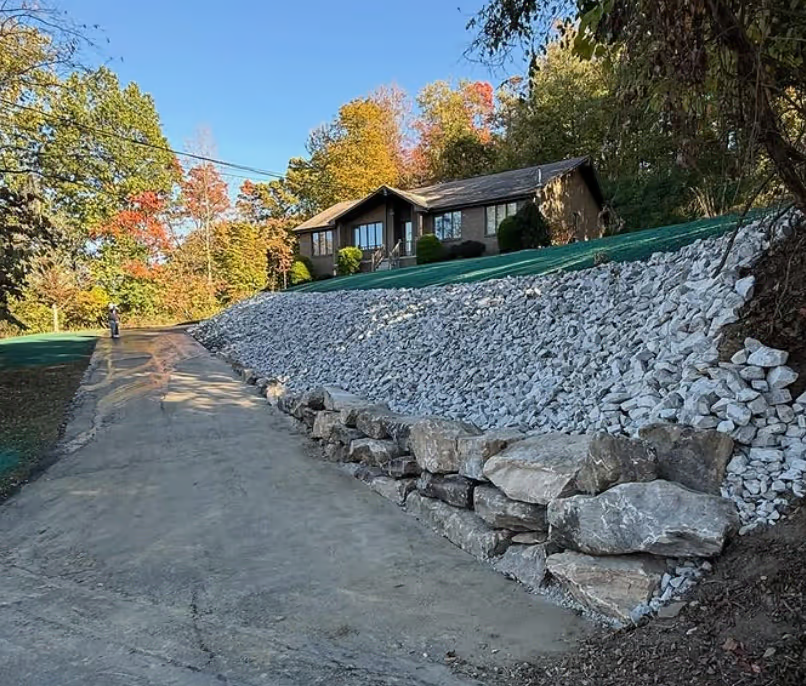
Yes, though less than the block price alone suggests, because excavation, base, drainage, and labor make up most of the cost no matter what the face is built from. For a 50-foot, 4-foot wall installed, standard SRW block typically lands $4,000 to $7,000, poured concrete $5,000 to $9,000, fieldstone or premium block systems $6,000 to $10,000, and cut stone $8,000 to $14,000. Block walls generally run around $20 to $55 per square foot of face. Our retaining wall materials guide compares the options for looks and longevity.
Getting a Real Number for Your Wall
Use the ranges here to budget, then get a number for your actual slope, soil, and access. Dirt Works designs and builds retaining walls across Pittsburgh's South Hills, including Whitehall, Bethel Park, Baldwin, Mt Lebanon, South Park, and Jefferson Hills, and we handle the engineering and permits on walls 4 feet and up. Contact us or call (412) 770-5334 for a free on-site estimate with a firm price, not a national average.