
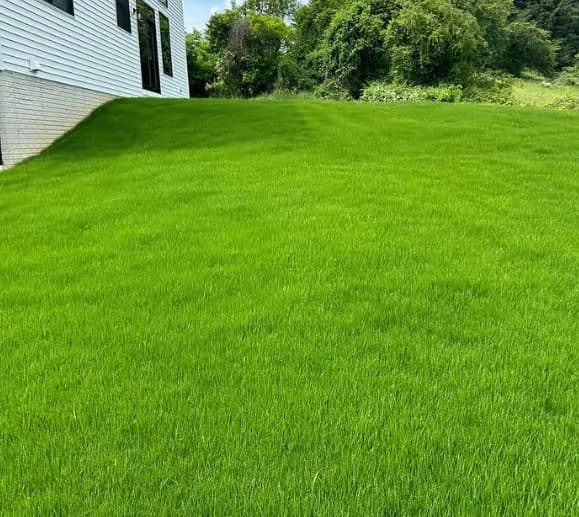
Your Lawn Is Trying to Tell You Something
A lawn that needs aeration doesn't go from healthy to dead overnight. It sends signals, some obvious, some easy to miss. If you've been watering, mowing, and fertilizing and the results still aren't there, the problem is probably underground. Compacted soil blocks everything you're putting on top from reaching the roots.
Pittsburgh properties are especially prone to this. The combination of clay-heavy soil, steep grades, and freeze-thaw cycles means most South Hills lawns are fighting compaction whether you realize it or not.
Here's how to tell if yours has reached the point where aeration will make a real difference.
1. Water Pools on the Surface After Rain
Healthy soil absorbs rainfall. Compacted soil sheds it. If you notice water sitting in low spots, sheeting across the yard, or running straight down slopes after a normal rain (not a downpour), the soil surface has likely sealed up.
This is one of the first signs most homeowners notice, and it's easy to dismiss as a grading problem. Sometimes it is. But if water used to soak in and now it doesn't, compaction is the more likely cause.
2. The Soil Feels Rock-Hard
This one's simple to test. Grab a screwdriver or a pencil and push it into your lawn. In healthy soil, it slides in with moderate pressure. If you're forcing it or it won't go past an inch, the soil is compacted.
Try this in several spots, especially high-traffic areas near walkways, play areas, or where you regularly mow. Pittsburgh's clay tends to compact unevenly, so you might find soft spots near garden beds and concrete-hard soil in the middle of the yard.
The screwdriver test works best when the soil is lightly moist, not bone dry and not soaked. A day or two after rain is ideal. Dry clay is always hard, so testing when it's dry can give you a false read.3. Your Lawn Has Thin Patches That Won't Fill In
You've overseeded. You've fertilized. You've watered. But those bare or thin spots keep coming back season after season. If the grass around the thin areas looks decent, the issue usually isn't seed or fertilizer; it's that the soil underneath those spots is too dense for roots to establish.
Aeration breaks through that layer and gives new seed a place to land with actual soil contact. Without it, seed sits on top of a hard surface with no way to anchor.
4. There's a Spongy Layer Between the Grass and Soil
Run your hand across your lawn and then look at a cross-section near an edge or bare spot. If there's a thick, matted layer of brown material between the green grass blades and the dirt, that's thatch.
A thin layer of thatch (under half an inch) is actually beneficial. It insulates roots and retains some moisture. But when thatch builds past half an inch, it becomes a barrier. Water and nutrients can't penetrate it. Fungal diseases find a home in it. Your lawn starts to feel bouncy or spongy underfoot.
Thatch builds up faster when soil is compacted because the microorganisms that normally break down dead grass can't thrive in oxygen-starved soil. Aeration brings air back into the equation, which jumpstarts natural decomposition.
5. Grass Looks Stressed Even When You're Doing Everything Right
You're on a decent fertilizer schedule. You water when it's dry. You mow at the right height. But the lawn still looks dull, thin, or off-color, especially during summer heat.
This is the frustrating one. When soil is compacted, roots stay shallow. Shallow roots can't access moisture deeper in the ground, so the grass wilts faster in heat and recovers slower. Fertilizer sits near the surface instead of reaching the root zone, which can actually burn shallow roots rather than feed them.
If your lawn care routine should be working and isn't, the soil is almost always the bottleneck.
6. Heavy Traffic Areas Look Worse Than the Rest
Side yards where the kids cut through. The path between the driveway and the back gate. The area around the grill or the swing set. These spots take more foot traffic than the rest of the lawn, and they show it.
Foot traffic compresses soil particles together, squeezing out the air pockets that roots need. Over a season or two, these areas thin out, develop bare spots, and stop growing at the same rate as the rest of the yard. You'll often see a visible line between the worn path and the healthier grass on either side.
Aeration won't eliminate wear from heavy traffic entirely (that's ongoing), but it resets the soil structure so grass can recover between seasons.
7. Your Lawn Was Installed Over Construction Fill
This one applies to a lot of Pittsburgh properties, especially newer builds and additions. During construction, the topsoil gets scraped off, heavy equipment compacts the subsoil, and then a thin layer of topsoil gets spread back over the top before sod or seed goes down.
The result is grass growing in two to three inches of decent soil on top of what amounts to a brick. Roots hit that compacted layer and stop. The lawn looks fine for a year or two, then starts declining as the shallow root zone can't sustain it through heat and drought.
If your home was built in the last five to ten years, or you had any significant construction or addition work done, your lawn almost certainly has a compaction layer underneath it.
What Happens If You Ignore These Signs
Skipping aeration when your lawn needs it doesn't cause a sudden collapse. It causes a slow decline that gets harder and more expensive to reverse each year.
Year one: The lawn looks a little thinner. Bare spots appear in late summer. You overseed in fall and some of it takes, some doesn't. Year two: Thatch thickens. Water runs off more. Weeds start filling the thin areas because they're tougher than grass in compacted soil. You spend more on weed control and fertilizer with less to show for it. Year three and beyond: The lawn is noticeably worse. Bare patches are larger. Weeds are established. The root system is shallow across the whole yard. At this point, recovering the lawn takes multiple treatments rather than a single aeration and overseed.Catching it early, when you first notice a couple of these signs, is significantly cheaper and faster than waiting until the lawn is in serious decline.
When to Aerate in Pittsburgh
If you're seeing these signs now in spring, you have two options:
Spring aeration (late April through May) works well when the lawn is in rough shape and you don't want to wait. Soil temperatures above 50°F allow new seed to germinate, and spring rainfall helps with establishment. The tradeoff is that summer heat will test young grass, so consistent watering matters. Fall aeration (late August through early October) is the preferred window for cool-season grasses. Soil temps are ideal for germination, weed competition drops off, and new grass gets weeks of root growth before winter dormancy. If your lawn is functional but declining, fall is the stronger play.Either way, the important thing is not to let another full season pass once you've identified the problem.
What Aeration and Overseeding Costs in Pittsburgh
For a standard residential lawn in the South Hills, professional core aeration and overseeding typically runs between $150 and $400 depending on lawn size and condition. That includes the aeration pass, premium cool-season seed blend, and starter fertilizer application.
Compare that to what most homeowners spend annually on fertilizer, weed control, and water trying to maintain a lawn that's fighting compacted soil: aeration is usually the better investment.
Frequently Asked Questions
How do I know if my lawn needs aeration or just more water?Try the screwdriver test. If the screwdriver goes in easily, your soil structure is fine and the issue may be watering, fertilizer, or something else. If it won't penetrate, compaction is the problem and no amount of water will fix it.
Can I aerate my lawn myself?You can rent a core aerator from most equipment rental shops. The machines are heavy and awkward to maneuver, especially on slopes, which describes most South Hills yards. For flat, simple lawns it's doable. For anything with grade changes, tight spaces, or significant square footage, professional equipment and experience make a noticeable difference in results.
How often should I aerate?For most Pittsburgh properties on clay soil with moderate traffic, once a year or every other year keeps compaction in check. High-traffic lawns or heavy clay benefit from annual treatment. If your soil is naturally looser, every two to three years is usually enough.
Is it worth aerating in spring or should I wait for fall?Both windows work. Fall produces better results for overseeding because weed pressure is low and conditions favor cool-season grass. But if your lawn is struggling now, spring aeration still provides real improvement, especially for compaction relief and water absorption. Don't skip a needed treatment just to wait for the "perfect" window.
Does aeration help with drainage?It helps surface absorption significantly. Water that used to pool or run off will soak in better after aeration. It won't fix grading issues or subsurface drainage problems, but for surface-level pooling caused by compacted soil, it's the right solution.
Stop Guessing: Get Your Lawn Assessed
If two or more of these signs describe your yard, aeration will almost certainly help. Dirt Works provides lawn aeration and overseeding across Pittsburgh's South Hills, including Whitehall, Jefferson Hills, Peters Township, South Park, Baldwin, Mt. Lebanon, Castle Shannon, and Bethel Park.
We'll take a look at your lawn, confirm whether aeration is the right move, and give you a straightforward estimate. No pressure, no obligation. Contact us for a free lawn assessment.