
Why Snow Contracts Get Signed in October, Not January
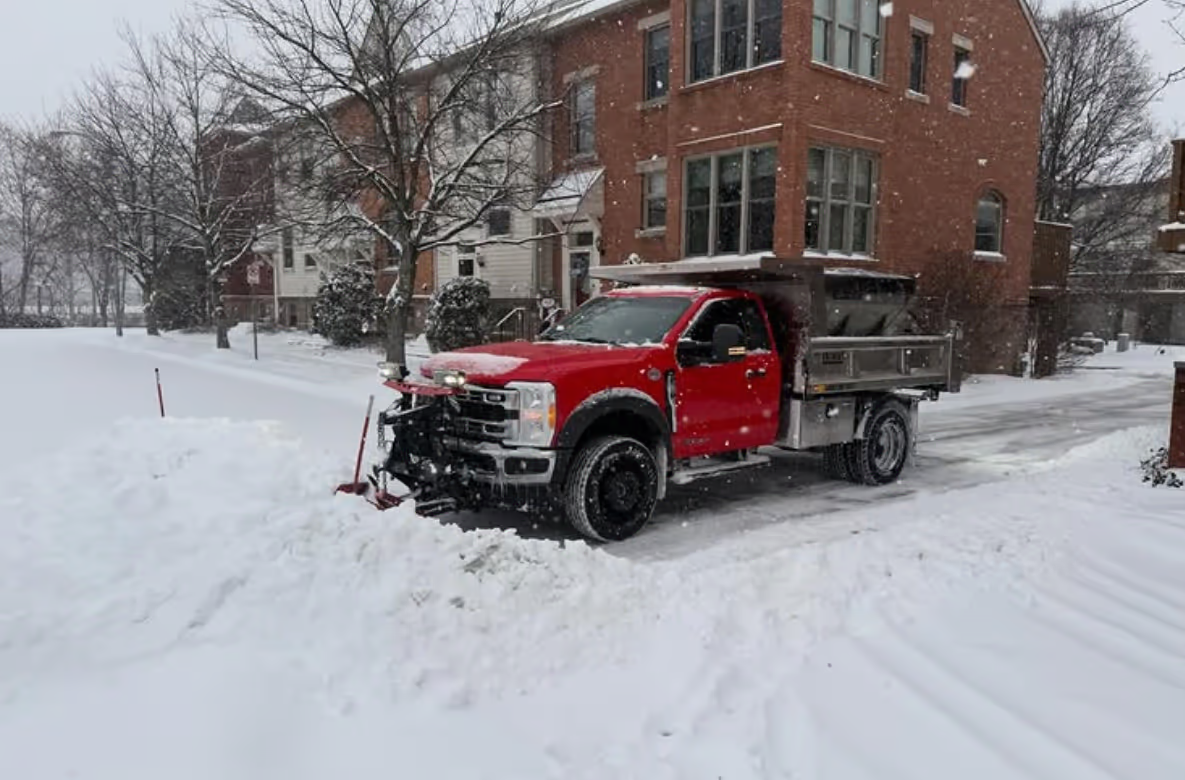
The homeowners and property managers who have a plowed lot on the first real storm of the year signed for it weeks earlier, usually in October, before anyone in Pittsburgh was thinking about snow. That is not a sales line, it is a capacity problem. A snow crew can only run so many routes in the eight or ten hours a storm gives them, and once those routes are full, they are full. The calls that come in during the storm are the ones that cannot be taken.
Pittsburgh's first frost typically lands in mid-October, and the first plowable accumulation follows within a few weeks of it. That makes early fall the working window: late enough to know what your property needs, early enough that routes are open and a crew can walk the site in daylight. Walking a lot before it is buried is worth more than it sounds, because that is when the crew finds the drain lids, the curb stops, the landscape beds, and the low spot that will ice over every night in January.
Seasonal Contract or Per-Event: Which One Fits Your Property
Two pricing structures cover almost every property, and the right one depends less on your budget than on how much a closed lot costs you.
A seasonal contract is a fixed price for the whole winter, regardless of how many storms show up. You are buying two things: a predictable number on the budget line, and priority routing when a storm hits. For a medical building, an apartment complex, a retail lot, or anywhere people arrive whether it snowed or not, that priority is the entire point. A light winter means you paid for less plowing than you could have, a heavy one means you paid for considerably more, and in the meantime nobody has to approve an invoice mid-storm.
Per-event pricing bills each visit as it happens. It suits properties that can absorb a slow morning, a light-use lot, a warehouse that opens at ten. You pay only for the storms that come. The tradeoff is routing: per-event properties get serviced after the contracted ones, which in a major event can mean hours.The practical question is not which is cheaper. It is what happens at your property at 7 a.m. if the lot is not clear. If the answer involves customers, tenants, patients, or liability, that is a seasonal contract.
What a Snow Contract Should Spell Out
Most disputes over snow service trace back to something nobody wrote down. Four things belong in writing before you sign.
The trigger depth
This is the accumulation at which crews automatically roll without you calling. Two inches is the common standard and the one our contracts use. It matters more than it looks: at a three-inch trigger, a two-and-a-half-inch storm leaves your lot untouched and technically nobody broke the agreement.
The response window
How long after the trigger, or after snow stops, until the property is clear. A contract that promises service without a window promises nothing you can hold anyone to. Ask whether crews cycle back through during a long storm, and where your property falls in the route order.
Ice control, not just plowing
Plowing without salting is half a service. A cleared lot at 4 p.m. that glazes over at 9 p.m. is arguably more dangerous than one nobody touched, because it looks safe. The contract should say whether salt is included, whether pre-treatment ahead of a forecast storm is included, and whether re-salting on a follow-up visit is billed separately.
Where the snow goes
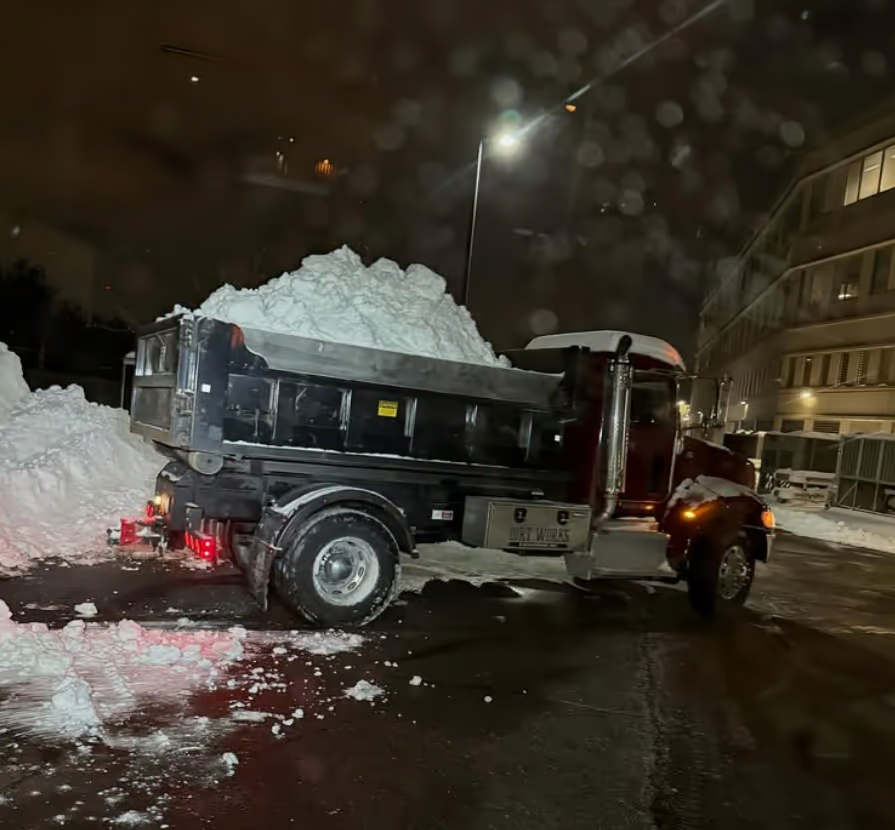
Every lot has a finite amount of room to stack snow, and by the third storm of a bad January that room is gone. Piles also melt, and where they melt determines where the ice forms. Snow piled uphill of a walkway drains across it every sunny afternoon and refreezes on it every night. On tight lots the answer is eventually hauling snow off site, which is a real line item and should be priced before you need it.
What Pittsburgh Winters Actually Deliver
Pittsburgh averages roughly 40 inches of snow a season, but the average is the least useful number in the conversation. What matters is the shape of it: most of our snow arrives as repeated two-to-four-inch hits rather than a handful of headline storms. That pattern is exactly what punishes a property without a standing arrangement, because none of those storms is dramatic enough to feel like an emergency, and there are fifteen of them.
The second factor is freeze-thaw. From November through March, daytime temperatures climb above freezing and fall back below it overnight, over and over. Meltwater runs across a cleared lot in the afternoon and locks into black ice after dark. This is why drainage and snow management are the same subject here: a lot with a low spot has an ice problem every winter until the grade gets fixed.
Residential Driveways in the South Hills
Residential plowing in Whitehall, Bethel Park, Mt Lebanon, and the rest of the South Hills is its own problem, largely because of slope. A steep driveway that is merely inconvenient in August becomes impassable with a half inch of packed snow on it, and the cars that cannot get up it are usually parked at the bottom, in the way. Steep drives need earlier service and more salt than flat ones, and they are worth flagging when you book rather than discovering together in February. Turnaround room is the other constraint: a plow needs somewhere to put the snow that is not the neighbor's yard, the mailbox, or the bottom of the driveway it just cleared.

What Salt Does to Concrete and Landscaping
Salt keeps people upright, and it is hard on everything it touches. De-icing salt drives the freeze-thaw cycle deeper into concrete than weather alone does, which is why the most spalled, pitted slabs in the region are almost always the ones nearest a walk or a driveway apron. If your concrete is already cracking or flaking, heavy salting will accelerate it, and it is worth deciding in the fall whether those surfaces get salt, a gentler de-icer, or a different traffic pattern for the winter.
Landscaping takes the other half. Salt-laden snow pushed into a bed kills turf and burns the roots of anything planted along a plow line, which makes where the piles go a landscaping decision as much as a snow decision. Better to have that conversation in October than in April when the beds come back bare.
Booking Snow Removal in Pittsburgh
The properties that get through a Pittsburgh winter without a bad morning are the ones where somebody walked the site in the fall, agreed on a trigger depth and a response window, and decided in advance where the snow was going to go. Dirt Works runs commercial and residential snow removal across Pittsburgh and the South Hills, on seasonal contracts and per-event pricing, with salting and ice management included in the conversation rather than added to it later. Contact us or call (412) 770-5334 and we will walk your property before the first storm decides the schedule for us.