
Why Pittsburgh Slopes Erode in the First Place
Most of the South Hills sits on dense clay subsoil, and clay is a bad combination with a slope. It doesn't absorb water quickly, so rain either sheets across the surface on its way downhill or soaks in just enough to get heavy and unstable. Add Pittsburgh's freeze-thaw cycle, where the top few inches of ground freeze and thaw repeatedly from November through March, and that surface layer loosens every winter whether anything is growing in it or not.
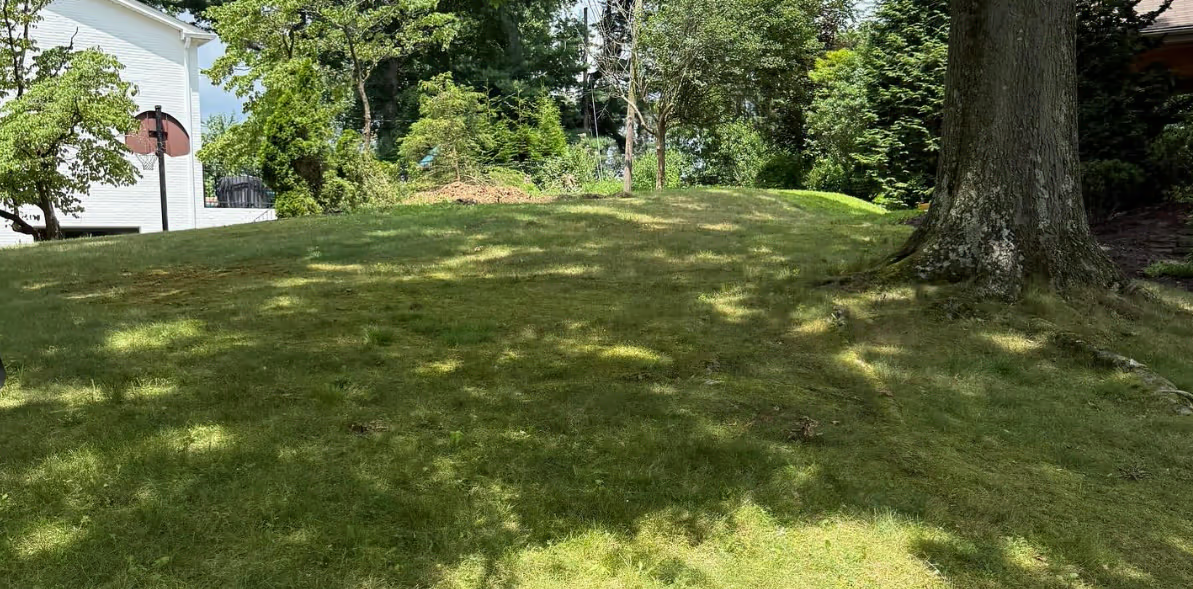
Bare slope makes all of this worse. Without roots holding soil particles together, every heavy rain moves a little more dirt downhill, and a slope that starts bare tends to stay bare because seed and topsoil wash away before they can establish. Construction disturbance is the usual trigger: a graded lot, a stripped bank behind a new patio, a slope that lost its tree cover. Once vegetation is gone, gravity and clay do the rest.
What Actually Holds Ground Together
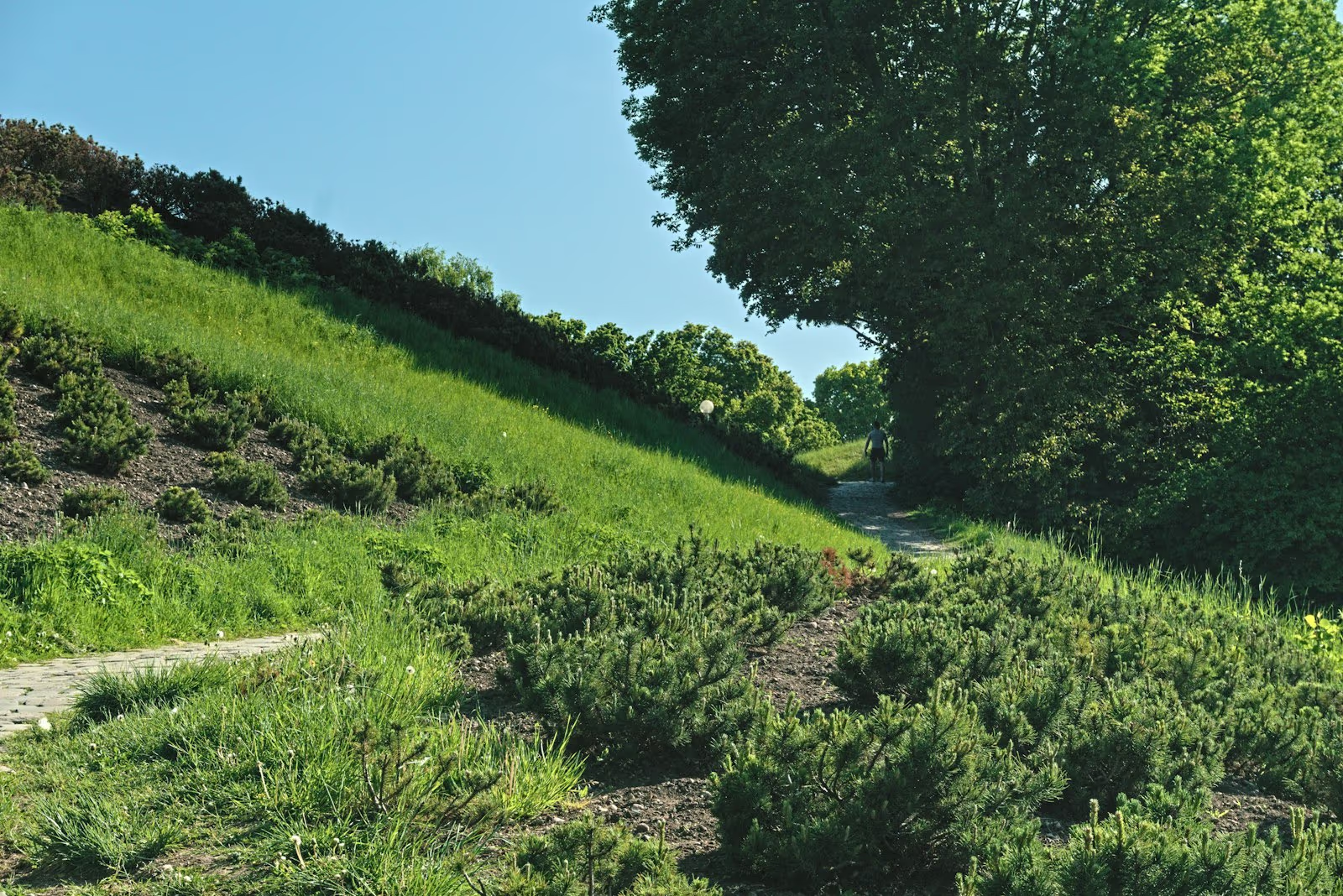
Roots are the mechanism, specifically dense, fibrous root systems that knit through the top foot or so of soil rather than a single taproot that goes straight down. A fibrous mat slows water enough for it to soak in instead of running off, and it physically holds soil particles in place when the surface gets saturated. That's why turfgrass alone rarely stops slope erosion (its roots are shallow) while native grasses, groundcovers, and deep-rooted perennials do the work turf can't.
Best Plants for Full Sun Slopes in Western PA
These hold up on exposed South Hills banks and are all reliably hardy in zone 6b:
- Creeping juniper (Juniperus horizontalis) spreads 6 to 8 feet, stays evergreen, and its wiry root system anchors into clay within a season. Low maintenance once established, and it needs almost no attention after that.
- Creeping phlox (Phlox subulata) forms a tight mat within two growing seasons and covers a slope in spring color before summer heat sets in.
- Switchgrass (Panicum virgatum), a Pennsylvania native, sends roots 5 to 10 feet deep. It handles both drought and standing water, which matters on a slope that swings between soaked and baked depending on the season.
- Black-eyed Susan (Rudbeckia hirta) has a fibrous root system and self-seeds readily, filling gaps a single planting misses.
Best Plants for Shaded Slopes and Wooded Banks
Under tree canopy, sun-loving groundcovers struggle, but a few natives handle shade and hold soil just as well:
- Christmas fern (Polystichum acrostichoides) stays evergreen through Pittsburgh winters and thrives on the same wooded banks where it grows wild across Western PA.
- Pennsylvania sedge (Carex pensylvanica) spreads by rhizome to form a low, grass-like mat under trees where turf won't grow anyway.
The Gap Plants Alone Can't Cover
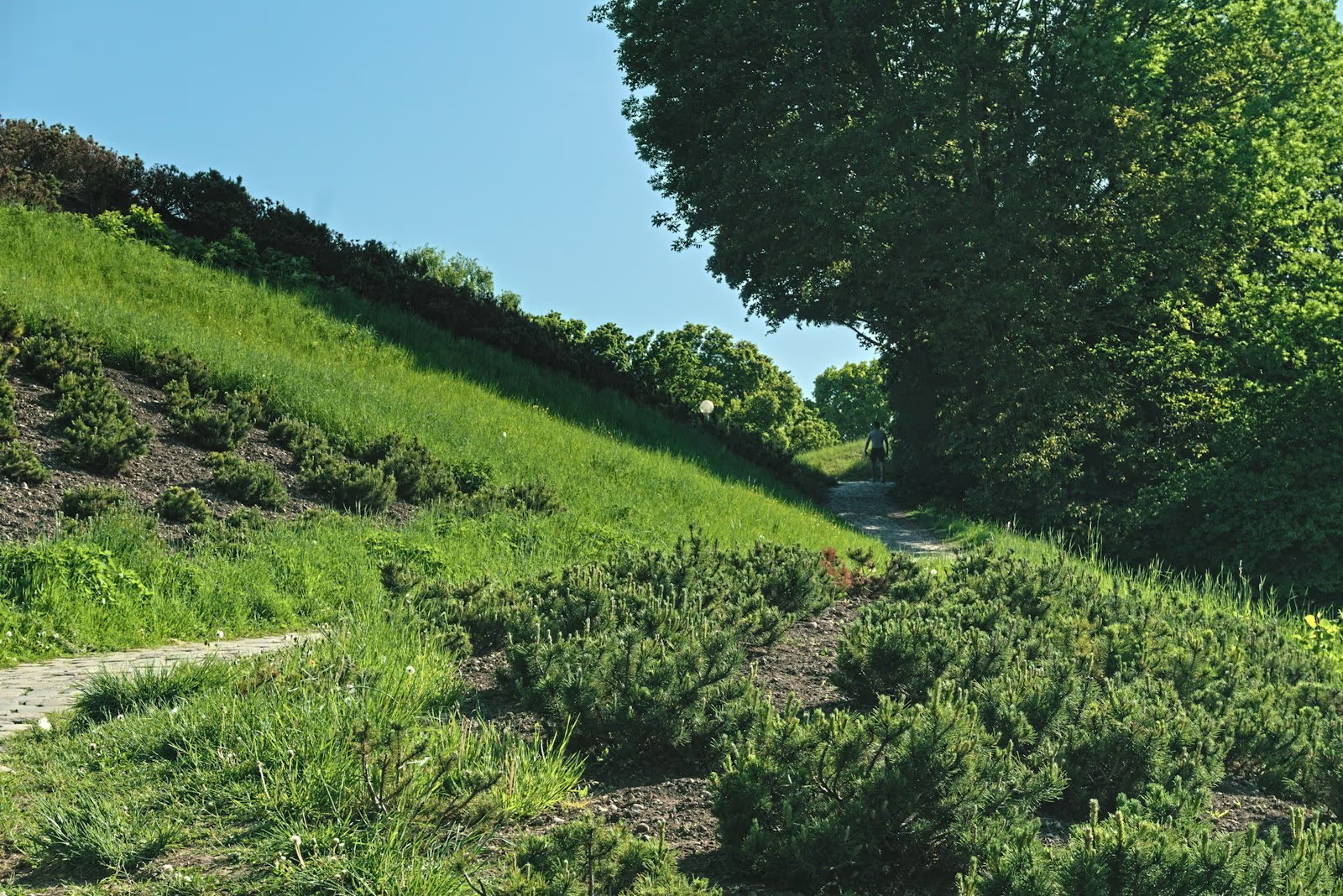
Here's the part most erosion control landscaping advice skips: none of these plants do anything for the first several months. A switchgrass plug or a phlox division needs a full growing season, sometimes two, before its root system is dense enough to hold soil against a real storm. On a bare slope, that gap between planting day and established roots is exactly when the worst erosion happens.
This is where hydroseeding earns its place. A hydroseed slurry includes tackifier and mulch fiber that binds to the surface almost immediately, holding soil in place while grass or a seed mix germinates underneath. For a slope, we'll often hydroseed with an erosion-control seed mix and follow with plugs of the perennials above once the initial cover is established, so the site is protected from week one instead of waiting a full season for plants to catch up.
When Plants Alone Aren't Enough
Plants stabilize the top foot or two of soil on moderate grades. They don't do much on a slope steeper than roughly a 3:1 ratio (one foot of drop for every three feet of run), and they can't stop a slope that's already actively moving. If you're seeing bare scarps, a wall that's leaning, or soil slumping in sheets rather than washing gradually, that's a structural problem, not a planting one. Our breakdown of Pittsburgh's landslide risk covers how to tell the difference and what the data says about which South Hills neighborhoods see it most.
On grades like that, plants work with a retaining wall rather than instead of one. The wall breaks the slope into shorter, manageable sections and handles the drainage load; the planting holds the soil on each terrace and keeps it from washing between walls.
Getting a Slope Planted Right
The right erosion control plants depend on the slope's grade, sun exposure, and how saturated the clay stays after a storm, and getting that match wrong is the most common reason a planting fails to take. Dirt Works handles grading, hydroseeding, and planting design for hillside properties across Pittsburgh's South Hills. If you've got a bare or eroding slope, contact us and we'll walk it with you and figure out what it actually needs to hold.